
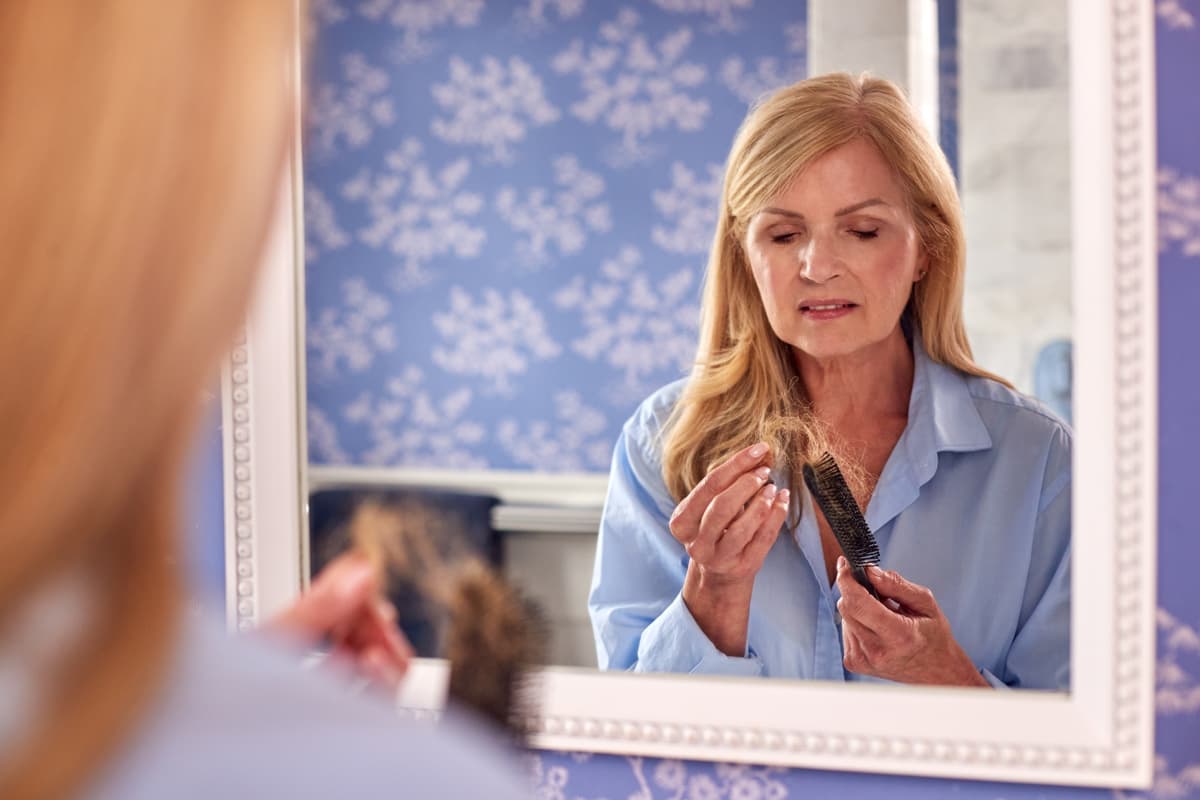
What’s going on when hair starts to thin during menopause?
As women enter the menopausal transition (perimenopause into menopause), hormonal shifts take center stage. The drop in estrogen and progesterone, and relative rise in testosterone and dihydrotestosterone (DHT), can shorten the hair growth (anagen) phase and lengthen the resting (telogen) phase. The result: hair becomes thinner, sheds more frequently, and feels less full.
How common is hair loss during menopause?
Hair thinning is incredibly common during and after menopause. Many women notice a change in texture, volume, and scalp visibility. It can show up as widening part lines, less definition in ponytails, or more hair in the shower drain. While not every woman experiences dramatic changes, even subtle differences can feel alarming.
Is this “hair loss,” or just a cosmetic shift?
This is a real, physiological change—often referred to as female pattern hair loss. It’s not always complete baldness, but rather diffuse thinning across the scalp, especially at the crown and part line. The effect may be more cosmetic than medical, but that doesn’t mean it isn’t significant emotionally or aesthetically.
Why does estrogen matter so much for hair?
Estrogen promotes hair growth by extending the anagen phase and promoting scalp blood flow. When estrogen declines, hair follicles shift toward a shorter growth cycle, producing finer, shorter strands. As estrogen leaves the scene, weaker and more vulnerable hair emerges.
Does progesterone play a role?
Yes. Progesterone helps balance DHT production by reducing activity of 5-alpha reductase, the enzyme that turns testosterone into DHT. As progesterone falls, DHT influence rises, contributing to follicle miniaturization and thinning.
Is DHT the only villain here?
DHT is a key player, but the story is layered. Other contributors include thyroid shifts, nutrient deficiencies, lifestyle factors, and genetics.
What about the role of stress or cortisol?
Chronic stress and elevated cortisol can push more hairs into the resting phase, resulting in noticeable shedding (telogen effluvium). When menopause and stress coincide, shedding may feel sudden and widespread even if underlying thinning is gradual.
Can nutritional gaps make things worse?
Absolutely. Key nutrients for hair include protein, iron, B-vitamins (especially B12 and biotin), vitamin D, zinc, and omega-3 fatty acids. Absorption of some of these may decline with age, and without enough in the diet, hair shafts can become more brittle and growth may slow.
Should I expect immediate improvements with diet changes?
Not always. Hair grows slowly—about half an inch per month—so shifts in nutrition, hormones, or supplements may take three to six months or more to show visible results. Patience and consistency are key.
How does thyroid function tie into this?
Thyroid hormones regulate metabolism and growth cycles, including hair. Hypothyroidism can lead to diffuse thinning, slow regrowth, and texture changes. Even “subclinical” shifts within normal lab ranges may matter for hair health in menopause.
Is it a good idea to get thyroid labs checked?
Yes. If thinning or shedding arises during menopause, it’s wise to assess thyroid function (TSH, free T4, free T3 at minimum). Identifying hypothyroid trends—even mild ones—can guide better interventions.
Are there topical treatments that help?
Many women find benefit from topical applications that support follicle health and scalp circulation. For example, agents that mimic or block DHT may help combat the hormonal imbalance on the scalp. Keeping the scalp exfoliated, nourished, and free of buildup can also promote healthier strands in the long term.
Does massage or microneedling help?
Scalp massage and gentle stimulation increase blood flow to hair follicles and may improve absorption of topical nutrients. Microneedling (in appropriate, mild forms) can also support collagen production and product penetration. Both practices take time to yield results, but many women notice improved texture and density over months.
Is hormone therapy (HT) appropriate for hair loss?
Systemic estrogen replacement can indirectly benefit hair by counteracting estrogen loss. However, HT decision-making must be holistic, accounting for individual risk factors, symptoms, and goals. Some women may choose localized topical estrogen or progesterone preparations for focused benefits, but any hormone strategy should be under professional guidance.
Can hair supplements boost outcomes?
Supplements containing biotin, collagen peptides, marine nutrients, or botanicals may support healthier hair. Look for well-formulated products, but keep expectations realistic: supplements are only one part of a multi-factor approach. Overdosing on any single nutrient isn’t advisable.
Is this reversible?
Often, yes—or at least partially. If the root causes (hormonal trends, nutrition, thyroid, stress) are addressed, many women see improved thickness, growth rate, and texture. Reversibility depends on the depth and duration of follicle miniaturization, but early action tends to yield better outcomes.
How long should recovery take?
Expect three to six months to notice improved density, and up to a year for new growth to feel more robust. For some, maintenance and gradual improvement continue well beyond that, especially when healthy habits and supportive treatments are sustained.
Does haircut or style choice matter?
Yes, styling techniques can help camouflage thinning—layering, soft bangs, root lifts, volumizing products, and strategic color can boost perceived fullness. Avoid overheating, harsh styling, or tight pulling that can exacerbate hair stress.
What about lifestyle changes?
Supportive habits include balanced nutrition, quality sleep, stress management, gentle hair care routines, scalp stimulation, and mindful supplement use. These lifestyle pillars reinforce any targeted treatment plan.
Are there warning signs that signal something deeper?
Yes. If thinning is sudden and drastic, accompanied by scalp irritation, significant pain, or other systemic symptoms, it’s wise to consult a healthcare professional. While menopause is common cause, sudden alopecia areata, scalp conditions, or autoimmune triggers may also occur.
Should I see a specialist?
If initial lifestyle, nutrition, thyroid, or stress interventions don’t help after several months, seeking input from a dermatologist or trichologist can clarify underlying causes. Advanced testing (e.g., hormone panels, scalp biopsy, refined thyroid evaluation) may be recommended in persistent cases.
What about prescription options?
Topical therapy with approved agents may slow thinning. In some cases, low-dose systemic therapy or compounded treatments may be considered—but these should be cautiously evaluated for safety, side effects, and appropriateness in midlife.
Is perimenopausal thinning the same as male-pattern baldness?
In some ways, yes—follicle miniaturization and hormone influence overlap. In others, no—female hair loss tends to be more diffuse, less complete, and influenced by a broader range of metabolic, nutritional, and hormonal factors beyond just DHT.
Can I do some things at home to support scalp health?
Yes. Try gentle scalp exfoliation, massage with nourishing oils or serums, keeping styling tools clean, avoiding tight clips, and preventing hair fragility after bathing.
How does sleep quality fit into this?
Sleep is a powerhouse recovery period—for hormones, tissue repair, and stress balance. Poor sleep can deepen stress hormone cycles and disrupt nutrient metabolism. Prioritizing consistent, restful sleep supports hair, skin, and whole-body restoration.
Is hydration relevant?
Yes—well-hydrated hair has better elasticity, less breakage, and improved shine. Adequate water intake and gentle moisturizing products contribute to strand resilience.
What about building a supportive routine—what does that look like?
Start with assessment: note thinning spots, review diet and supplement gaps, check thyroid, begin gentle topical support, add stress-reducing habits, and track changes over time.
Is it realistic to expect a full “cure”?
Complete reversal to pre-menopausal thickness may not be realistic—but measurable improvement and prevention of further loss absolutely is. Many women experience more fullness, healthier texture, and renewed confidence when a comprehensive, consistent strategy is followed.
What’s the best way to frame expectations?
Think in seasons, not weeks. Your approach is a long game: gentle interventions, healthy habits, and realistic timelines. Celebrate small wins: fuller ponytails, fewer hairs in the drain, or softer texture.
Is it possible that hair loss is due to more than just hormones?
Yes, while hormonal changes are a significant trigger during menopause, hair loss can be multifactorial. Underlying causes may include iron deficiency, low vitamin D, chronic inflammatory conditions, scalp issues, autoimmune disorders, medications, or digestive problems.
Can hair loss be the first sign of a broader health issue?
Sometimes, yes. Thinning hair may precede diagnoses of hypothyroidism, iron deficiency, PCOS, adrenal fatigue, or chronic stress syndromes. If excessive shedding accompanies systemic symptoms, broader evaluation is warranted.
Is traction alopecia more likely with aging hair?
Yes. Aging hair becomes more fragile, and tight hairstyles can cause localized thinning. Midlife is a good time to adopt looser, scalp-kind styling.
How does menopause impact hair on the rest of the body?
Scalp hair may thin, but facial/body hair patterns can shift oppositely: increased facial hair, thinning eyebrows, reduced leg/arm hair, or sparse pubic hair. These changes reflect estrogen decline, androgen balance, and slowed follicle cycling.
Is female pattern hair loss genetic?
Yes, genetics influence risk. But lifestyle and early interventions can soften its impact.
What role does inflammation play in hair loss?
Chronic inflammation disrupts follicle health and growth cycles. An anti-inflammatory lifestyle—whole foods, movement, stress regulation—can support scalp health.
Can alcohol or smoking impact hair during menopause?
Yes. Smoking accelerates hair/skin aging and reduces scalp circulation. Alcohol depletes nutrients and increases inflammation, both affecting hair quality.
What about caffeine? Good or bad for menopausal hair?
Caffeine can stimulate follicles topically, but excessive intake may worsen cortisol dysregulation. Balance is key.
Do collagen supplements help during menopause?
Collagen peptides may support hair and skin structure. Not a cure, but a supportive layer in a balanced regimen.
What’s the connection between gut health and hair thinning?
Gut issues may impair nutrient absorption and elevate inflammation, indirectly harming hair. Estrogen decline can also shift microbiome balance, influencing growth quality.
Does losing weight during menopause worsen hair loss?
Yes, rapid or restrictive dieting can trigger shedding. Balanced, protein-sufficient approaches help protect follicles.
Is it ever too late to start addressing menopausal hair loss?
No. Even years later, follicles may respond to circulation, nourishment, and scalp care. Consistency and patience are more important than timing.
Can menopausal hair loss affect self-esteem?
Definitely. Hair connects to identity and confidence. Acknowledging emotional impact and addressing causes together empowers healing.
Should I avoid coloring or highlighting my hair if it’s thinning?
Not necessarily. Professional coloring can add fullness, but avoid harsh or frequent bleaching. Use gentler formulas and hydrating treatments.
Does hair texture change during menopause?
Yes. Hair often becomes finer, dryer, frizzier, or less shiny due to hormonal and scalp oil changes. Moisturizing products help preserve texture.
Can exercise help with hair thinning?
Indirectly, yes. Movement boosts circulation and regulates hormones, positively influencing scalp health.
What is “miniaturization” and why does it matter?
Miniaturization is follicle shrinking from DHT influence. Early detection enables better intervention before follicles stop producing hair.
Are there natural ways to support estrogen for hair health?
Foods like flax, soy, or red clover provide mild phytoestrogens. Effects are modest, and professional guidance is recommended if risks exist.
Do adaptogens help with hormonal hair loss?
Adaptogens like ashwagandha and rhodiola may regulate stress hormones, indirectly supporting hair resilience.
How do I know if it’s telogen effluvium vs. androgenic hair loss?
Telogen effluvium is sudden, diffuse, and stress-triggered; androgenic loss is gradual, crown-focused, and genetic. Both may overlap and require exam for clarity.
What types of shampoos and conditioners are best for thinning hair?
Sulfate-free, volumizing formulas with biotin, caffeine, or niacinamide are best. Avoid heavy silicones. Scalp exfoliants help maintain follicle health.
Does hydration level of the scalp impact hair growth?
Yes. A well-hydrated scalp supports elasticity and reduces fragility. Light oils or serums can help maintain balance.
How should I monitor progress over time?
Track photos, shedding amounts, ponytail thickness, and scalp visibility every 4–6 weeks. Small improvements show gradual progress.
What Actually Helps With Menopausal Hair Loss
Hair loss during the menopausal transition is common and complex. It reflects inner changes, not vanity alone. With a multi-angle strategy of scalp care, nutrition, lifestyle, and patience, many women restore fullness and confidence. Improvement may be slow, but consistency makes resilience possible—even in midlife and beyond.
Disclaimer: The information provided on this website, including blog posts, is for general educational and informational purposes only and is not intended as medical advice. As a board-certified physician, I aim to share insights based on clinical experience and current medical knowledge. However, this content should not be used as a substitute for individualized medical care, diagnosis, or treatment. Always consult your own healthcare provider before making any changes to your health, medications, or lifestyle. Westside Women's Health and its affiliates disclaim any liability for loss, injury, or damage resulting from reliance on the information presented here.