
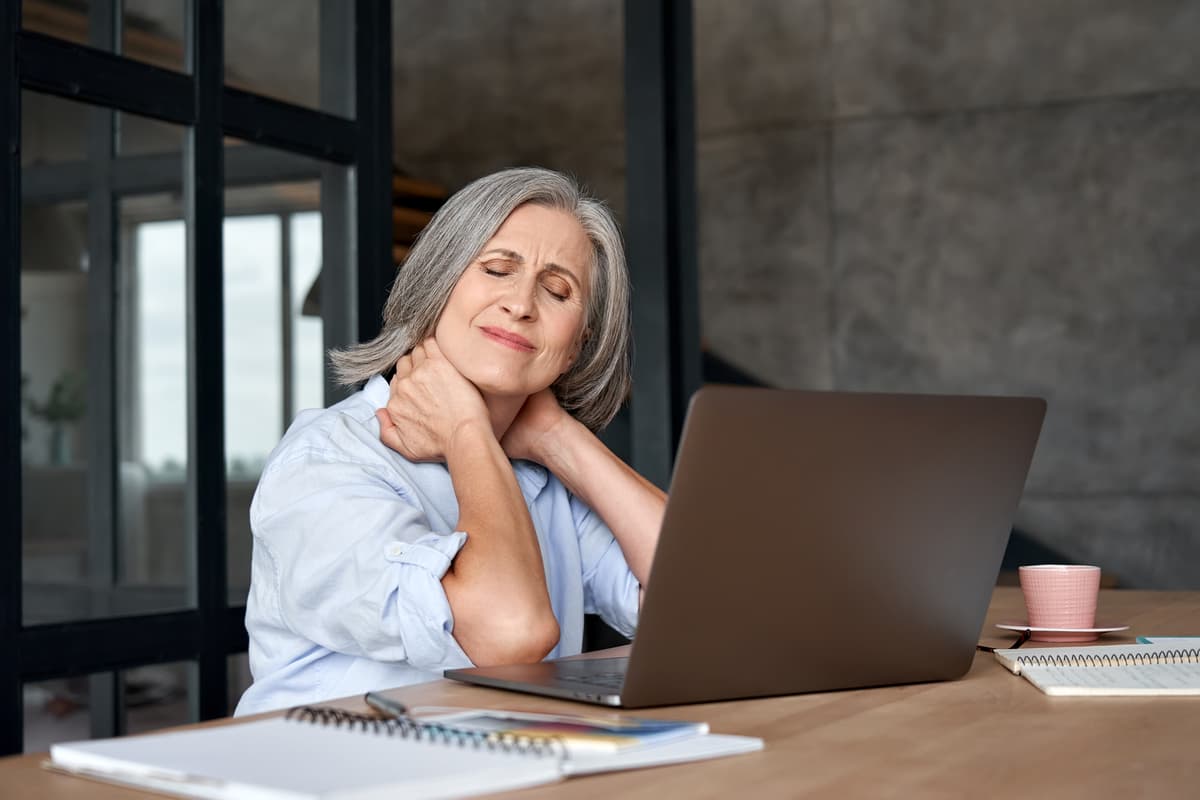
Is joint pain a common symptom during menopause?
Yes. While most people associate menopause with hot flashes, mood shifts, or sleep disturbances, joint pain is a surprisingly common and often overlooked symptom. Many women begin experiencing stiffness, aching, or reduced mobility during the perimenopausal and menopausal years—even if they’ve never had joint issues before. This discomfort can occur in large joints like the hips and knees or smaller joints like fingers, wrists, and toes.
Why does joint pain emerge during menopause?
Estrogen plays a role in maintaining joint and musculoskeletal health. As estrogen declines during the menopausal transition, its protective effect on cartilage, connective tissue, and inflammation weakens. This hormonal shift can lead to:
- Increased joint stiffness, especially in the morning
- Muscle tension around joints
- Reduced collagen production in tendons and ligaments
- Heightened sensitivity to inflammation
Joint pain during menopause isn’t solely caused by aging or physical wear and tear—it can be hormonally mediated and part of a broader systemic shift.
What types of joint pain are most common during menopause?
- Aching in the neck, shoulders, or upper back
- Stiff fingers or swollen knuckles, especially in the morning
- Pain in the hips, knees, or lower back
- General muscle soreness around joints
- Clicking or popping sensations with movement
Many women describe it as a diffuse, low-grade discomfort that may fluctuate day to day.
How early in the menopausal transition can joint symptoms begin?
Joint pain can start as early as perimenopause—the years leading up to menopause when hormone levels begin to fluctuate. This phase may begin in a woman’s early-to-mid 40s and last several years. Some women notice that joint symptoms precede other classic signs of hormonal change.
Is this related to arthritis?
It depends. Menopausal joint pain does not always mean arthritis is present. However, estrogen decline may:
- Exacerbate existing osteoarthritis
- Increase risk of developing degenerative joint changes
- Unmask early inflammatory arthritis in predisposed individuals
While not all joint pain equals arthritis, it’s important to monitor the pattern and progression. If swelling, redness, or persistent discomfort occurs, medical evaluation is appropriate.
Can hormonal changes increase inflammation in the body?
Yes. Estrogen has anti-inflammatory effects. Its decline during menopause may result in:
- Greater systemic inflammation
- Increased sensitivity to pain
- Slower recovery from injury
- Reduced joint lubrication
These effects can make joints feel stiffer and more inflamed even in the absence of structural joint damage.
Are other symptoms linked with joint pain during menopause?
Often, yes. Women may experience joint pain alongside:
- Fatigue
- Sleep disturbances
- Brain fog
- Mood swings
- Digestive changes
- Muscle tightness or spasms
The body’s systems are interconnected. When hormone levels shift, multiple symptoms can emerge together, making it important to consider the broader context.
Is joint pain during menopause temporary or permanent?
For many women, joint pain is transient. As the body gradually adjusts to postmenopausal hormone levels, symptoms may subside or stabilize. However, without attention to joint health, lifestyle, or hormone support, discomfort can persist and worsen with time. The goal is not just to tolerate joint pain—but to address its root contributors and improve mobility long term.
What lifestyle factors may worsen joint pain during menopause?
Several lifestyle factors can aggravate joint pain, especially during hormonal transition:
- Sedentary behavior
- Poor sleep
- Chronic stress
- Unbalanced diet
- Lack of hydration
- Overuse injuries
Adjusting these factors can make a significant difference in joint comfort.
How does menopause affect connective tissue like ligaments and tendons?
Estrogen supports collagen production—the protein that gives connective tissues their elasticity and strength. As estrogen levels drop, collagen production slows. This can lead to:
- Stiff or brittle ligaments
- Increased risk of tendonitis
- Slower healing after injury
- Reduced range of motion
Many women notice that their flexibility changes and their bodies feel more prone to stiffness or strain in midlife.
Can joint pain affect physical activity during menopause?
Yes. Pain or stiffness in the joints can reduce a woman’s desire or ability to exercise. This creates a problematic cycle:
- Less movement → more stiffness
- More stiffness → more discomfort
- More discomfort → even less movement
Breaking this cycle through gentle, consistent movement is key. Even short, low-impact activities can keep joints flexible and pain levels manageable.
Is weight gain during menopause connected to joint pain?
Weight gain is common during menopause and can directly affect joint health, especially in weight-bearing areas like the knees, hips, and lower back. Additional body weight increases stress on these joints and may accelerate cartilage wear. Fat tissue also produces inflammatory chemicals, which may amplify joint pain and swelling.
That said, joint pain can also occur in lean women during menopause, so weight is just one factor.
What kind of exercise is best for joint health in menopause?
The best exercises for joint support are low-impact, mobility-friendly, and anti-inflammatory. These include:
- Walking or gentle hiking
- Swimming or water aerobics
- Pilates or yoga for flexibility and core strength
- Resistance training with light weights or bands
- Cycling at a relaxed pace
Movements that promote circulation, balance, and joint alignment can ease pain and prevent further injury.
Does sleep impact joint pain?
Absolutely. Poor sleep quality—common during menopause—can lower pain thresholds, increase inflammation, and limit the body’s ability to repair tissues. Sleep disruptions may intensify perceived joint pain. On the flip side, improving sleep hygiene can reduce overall sensitivity and discomfort.
Can emotional stress make joint pain worse?
Yes. The connection between the nervous system and pain perception is powerful. Chronic stress can lead to:
- Muscle tension around joints
- Heightened pain sensitivity
- Elevated cortisol and inflammation
- Increased fatigue, which amplifies pain perception
Stress reduction strategies can play an important role in managing joint symptoms.
Are certain joints more affected than others during menopause?
There isn’t one universal pattern, but some joints tend to be more commonly affected:
- Knees
- Hips
- Fingers
- Neck and shoulders
- Lower back
The pattern can vary from woman to woman, and it may evolve over time.
How can diet support joint health in menopause?
Nutrition plays a foundational role in joint comfort and tissue resilience. Foods that may support joint health include:
- Omega-3 fatty acids
- Antioxidant-rich vegetables and berries
- Bone broth or collagen peptides
- Turmeric, ginger, and other anti-inflammatory spices
- Hydrating fruits and vegetables
Avoiding or reducing sugar, trans fats, and processed foods can also reduce inflammatory load on the joints.
Does hydration really impact joint comfort?
Yes. Joints are cushioned by synovial fluid, which relies on adequate hydration. Dehydration can make joints feel dry, creaky, or stiff. Drinking enough water throughout the day supports both joint lubrication and circulation.
Can joint supplements help during menopause?
Some women find relief using joint-supportive nutrients such as:
- Collagen peptides
- Glucosamine and chondroitin
- MSM
- Magnesium
- Vitamin D3 and K2
- Omega-3s
While not universally effective, these nutrients may reduce inflammation, support cartilage, and ease discomfort in some individuals.
What role does posture play in joint pain?
As hormonal changes affect connective tissue and muscle tone, posture may deteriorate, leading to misalignment and compensatory pain. Common postural shifts during menopause include:
- Forward head and neck posture
- Rounded shoulders
- Anterior pelvic tilt
- Collapsing arches in the feet
These changes can strain joints. Body awareness, posture training, and ergonomic adjustments can be surprisingly effective in reducing joint stress.
Are there early signs that joint pain may worsen without support?
- Increasing pain frequency or intensity
- Joint instability or giving out
- Visible swelling or deformity
- Grinding, catching, or locking of joints
- Loss of range of motion
Catching and addressing these signs early allows for more targeted support and prevents long-term complications.
Does joint pain go away after menopause ends?
For some women, joint pain improves postmenopause as hormonal fluctuations stabilize. Others may continue to experience symptoms, especially if inflammatory or degenerative processes have been set in motion. The outcome varies, but proactive care during the transition years increases the likelihood of long-term joint health.
What mindset helps women manage joint pain in menopause?
A few key mindsets support resilience and progress:
- Curiosity over frustration
- Consistency over intensity
- Holistic over isolated
- Empowerment over resignation
With awareness, support, and a willingness to adapt, many women feel stronger and more mobile after menopause than they did before.
How do biomechanics change during menopause, and how do they affect joint pain?
Biomechanics refers to how your body moves—your posture, gait, joint alignment, and muscle engagement. During menopause, subtle changes in muscle mass, connective tissue integrity, and fat distribution can alter biomechanics. For example:
- Pelvic tilting due to core muscle weakening can strain the lower back and hips.
- Loss of arch support in the feet can cause knee and ankle misalignment.
- Shifted center of gravity from abdominal weight gain may alter gait and stress knees.
- Muscle imbalances from long-term repetitive movement or sedentary habits may worsen with estrogen decline.
These small shifts place abnormal load on joints and lead to compensatory patterns. Over time, they can create discomfort even in women without structural joint disease.
How does loss of muscle mass (sarcopenia) during menopause impact joint pain?
Estrogen supports the maintenance of lean body mass. As it declines, women often experience sarcopenia—a gradual loss of muscle tissue. Muscle is critical for joint support. Without enough muscular strength:
- Joints are less protected against impact.
- Tendons and ligaments must absorb more load.
- Joint stability diminishes, increasing risk of injury.
This loss is particularly impactful in the hips, knees, and spine. Strength training helps maintain muscle and joint alignment, but many women avoid it due to fear of worsening pain. In truth, intelligent, progressive resistance training is often one of the best tools to reverse joint discomfort.
Can pelvic floor dysfunction contribute to joint discomfort during menopause?
Yes, and this is often missed. The pelvic floor connects to the hips, spine, and abdominal muscles. As estrogen drops, these muscles may weaken, contributing to:
- Hip instability
- Low back pain
- Poor postural support
- Sacroiliac joint dysfunction
Women who experience urinary incontinence or pelvic pressure during menopause may also be at risk for underlying postural dysfunctions that manifest as joint pain elsewhere in the body. Addressing pelvic floor health holistically can indirectly improve joint symptoms in the hips, back, and knees.
Is the morning stiffness experienced by many menopausal women inflammatory or mechanical?
Often, it’s both. Morning stiffness lasting less than 30 minutes usually reflects mechanical stiffness—due to poor circulation, inactivity during sleep, or fluid redistribution. Longer-lasting stiffness, especially with swelling or heat, may point to low-grade inflammation.
Women in menopause may experience “non-specific inflammatory responses” that mimic early arthritis but don't show up on lab markers or x-rays. Hormonal changes, poor sleep, elevated stress hormones, and sugar intake can all amplify these sensations. Stretching and morning movement routines can help break the cycle.
Why do some women experience joint pain in new areas post-menopause?
Joint pain often migrates or shows up in areas never previously affected. Some common reasons:
- Loss of estrogen receptors in previously unaffected joints as menopause deepens
- Compensation for existing stiffness in other areas
- New postural habits formed during the transition
- Sleep positions causing joint compression or poor circulation
- Weight gain impacting joints that were previously resilient
The menopausal transition is a biomechanical and biochemical shift. It’s not unusual for the body to present pain in new or unexpected ways during this time.
How do sleep positions influence joint health during menopause?
Many women report worsening joint pain depending on how they sleep. Menopause-related joint sensitivity can be aggravated by:
- Side-sleeping on a misaligned shoulder or hip
- Stomach-sleeping, causing lower back compression
- Using old or overly soft mattresses that fail to support natural alignment
- Lack of pillow support between knees, under the neck, or beneath arms
Sleep quality is already fragile in menopause due to hot flashes or insomnia. Correcting sleep ergonomics can reduce nighttime joint stress and improve rest and recovery.
Living Well With Menopausal Joint Pain
Joint pain during the menopausal transition is real, disruptive, and often misunderstood. It can affect how you move, how you sleep, and how you feel in your body. But it is also modifiable. When women understand the role of hormones, inflammation, connective tissue, and lifestyle, they can take meaningful steps toward reducing discomfort and reclaiming ease in movement.
Menopause may bring changes, but it also brings opportunity—the opportunity to tune into the body, make wise choices, and prioritize long-term health. Joint care is not a separate project from menopause care; they are deeply intertwined. And when we support one, we often support both.
Disclaimer: The information provided on this website, including blog posts, is for general educational and informational purposes only and is not intended as medical advice. As a board-certified physician, I aim to share insights based on clinical experience and current medical knowledge. However, this content should not be used as a substitute for individualized medical care, diagnosis, or treatment. Always consult your own healthcare provider before making any changes to your health, medications, or lifestyle. Westside Women's Health and its affiliates disclaim any liability for loss, injury, or damage resulting from reliance on the information presented here.